

 Autism and autism awareness is growing and we are in the middle of a cultural discussion about what that looks like as a society. Thanks to the wild popularity of the 50 Shades of Grey books, we are also in the middle of a massive discussion of kinky proclivities. What does it look like when both these things are combined? Today we find out! Let’s get started, shall we?
“I have an interest in BDSM, and an abundance of health issues–diabetes and mild Autism Spectrum Disorder. I have had an interest in BDSM for many years now but have not acted on them yet. How do you tell your partner(s) your concerns as well as your interests?”–Kinky And Autistic
Don’t Wait Till Your Deep In A Relationship To Disclose Important Information
 When we are first getting to know someone better, we tend to want to put our best foot forward. With the hopes of captivating someone, we keep our skeletons in the closet and present only our very best self. It is an almost universal technique. Once we get someone sufficiently engaged and committed, then we feel more comfortable dropping the mask. We let them see the true version of ourselves that we have stashed away in the dark. While this is a completely understandable technique, it does both you and potential partners a disservice in the long run.
Of course we should always strive to be our best selves, I am in no way counseling going around like an aloof asshole. However, health issues and sexual proclivities are things that need to be discussed in the beginning of a relationship, not after you’ve been with someone for 6 months and suddenly disclose “I have diabetes, get easily overstimulated in large crowds, and desire to bend you over my knee to play your butt like a pair of bongos.”
Your autism, diabetes, and kinky desires don’t need to be laid out on the dinner table during the very first date. However, your health issues and proclivities should be brought up sooner rather than later. Are some people going to walk away? Most certainly. But those are not people you would want to invest your precious time with in the first place. Think of being honest as a benchmark that lets you know which people you want to continue to interact with. The people that are worth your time and are interested in you as a person will be willing to work with your health issues and sexuality.
These types of discussions are easier said then done. They become even more difficult when autism comes into the mix since one of the hallmarks of autism is an impaired ability to communicate vs. neurotypical individuals. However, there are steps to take to make communicating with your partner(s) easier.
Get Clear About Your Own Desires Before Attempting To Communicate Them
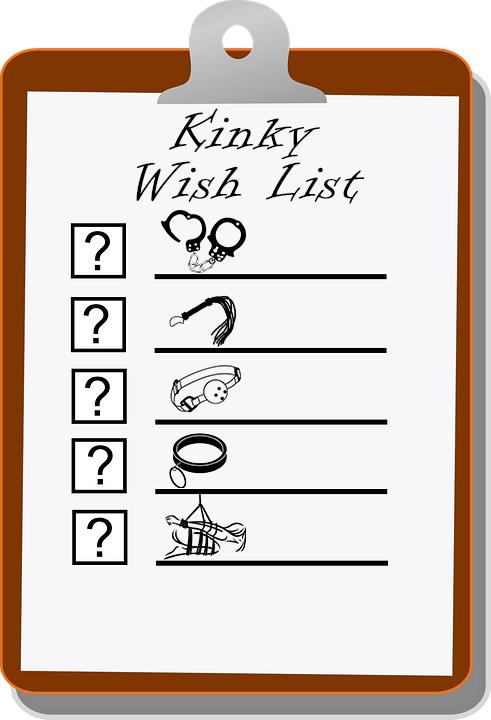 The first thing you need to do is to get clear with yourself exactly what you want to say. You’ve told me that you have an interest in BDSM but haven’t acted on this curiosity yet. Sit down and think hard about what this means to you. Be honest with yourself about what specific acts or situations you want to explore. The more you have a grasp on the specific BDSM activities you want to try with your partner(s), the better your ability to accurately communicate your desires.
When making your kinky wish list, also take your health concerns into account. How will this impact the play you want to engage in? It is important to know your own personal limits to avoid turning a fun sexy scene into a nightmare situation.
I used to have a partner that was not only diabetic, they struggled to manage it while simultaneously not taking it seriously. They would take me out for elaborate bondage shoots in the woods where nobody else was around for miles. However, they were unable to tell me that their blood sugar was shifting so badly that occasionally they would collapse and be unable to move. I only found out the extent of their diabetes from others who had seen them collapse before. Whether they were worried that if they disclosed such information I would no longer want to do rope with them or simply were unable to take the situation seriously, I will never know. What I do know is that it was information that needed to be shared with potential play partners.
Once you have a good understanding of what you want to say, write it down on a piece of paper so you are able to remember your points. It is easy to get distracted or flustered during these conversations. Having an outline of what you want to cover keeps the discussion on point. Practice what you are going to say. Heck, practice in the bathroom mirror if you need to!
When it’s time to have the talk make sure that it’s at a time and place that is comfortable for everyone involved. You may be excited and want to blurt out all the information at once but don’t surprise the other person with the talk, check in with them before hand to make sure it is a good time. Also it is important to make sure the location is a good neutral space with nothing present to over stimulate or distract you. The more you prepare for the conversation, the better it will go.
Also, remember when talking about your sexual desires, keep the conversation fun and lighthearted. BDSM is all about play. This is something fun that you want to share with them, something that hopefully everyone will enjoy doing.
Autism Is Fairly Common In The Kink Community
 If it helps any, there are a fair amount of autistic people that are also kinky. Which makes sense if you think about it. There are very clear negotiations and rules. Some autistic individuals report “Kink really ‘speaks’ to me, because it’s all about rules and boundaries, which is basically Aspie porn” and “it allows intimate sexuality and non-verbal communication to be laid out, scripted, predictable, understandable, and enjoyable“. There is a comfort in the more clearly defined boundaries and protocols of kinky relationships. Autistic people can struggle with social awareness and reading other people’s cues. Kinky play takes some of the guesswork off of the table and replaces it with a formula and structure that is much easier for autistic individuals to grasp.
Even though it can be scary to put yourself out there, the more you do, the more you open yourself up to possibilities. Hope you find what you are seeking. Have fun with it and good luck!
Keep it Kinky My Friends,
RDG
Want to add your own insight to the conversation? Leave a comment below.
Have a question that you want answered in the Dirty Talk Advice Column? Contact Rain here.
Keep these columns coming.
 Support Rain on Patreon
OR




As a non-neurotypical person who rocks some skills and played on stage and seemed to attract a lot of attention, I passed on a lot of sex because I was unable to interpret consent and I am scared of my inner rape-beast. The culture of explicit negotiation works so much better for me. Being able to have words that allow me to trust that I am pleasing my partner makes my life so much better. Thank you so much for advocating for us. I understand that you and I will never play together, but I think you are amazing. I… Read more »
I loved this Article! I found it very relatable and informative. I have discovered the BDSM community here in LA this past July. I too am a high functioning autistic adult man, having been diagnosed with asperger’s as a child. I like the fact that safety, trust and education are widely broadcasted at venues such as Lair de sade, and Sanctuary. I haven’t ventured into club Threshold but have heard they also have classes. I like the scene so far the protocol. Though I am a bit on edge grasping polyamorous relationships. I consider myself more of a monogamous person.… Read more »